

Getting your puppy’s diet right from the start can help build healthy eating habits that support their growth, development and wellbeing into adulthood. From choosing the right food to understanding how much and how often to feed, a balanced approach in the early months can make a real difference to your puppy’s health now and in the future.
Why proper nutrition is important for your growing puppy
Your puppy seems small now, but they have a lot of growing up to do in a short space of time! In just 12 months (up to 24 months for larger breeds) they'll become fully-fledged adults.
In the meantime, their bodies and brains have to develop incredibly quickly, and plenty of high-quality puppy food helps them to get there. They definitely need it, as a healthy, energetic puppy can burn through up to twice as many calories as an adult dog!
What should I feed my puppy?
A specially-formulated puppy food is the best choice to feed a puppy for optimal growth. This is because these diets are complete and balanced, which means they contain everything your puppy needs to help them grow up healthily. There’s no need for extra supplements or pieces of human food – in fact, these might do more harm than good, no matter how insistently they show you their puppy-dog eyes!
The Best Puppy Food – What to Look For:
Puppy food is usually more energy-dense than adult dog food, as puppies need plenty of calories for all the growing they have to do.
Puppy foods tend to contain extra protein to support the healthy development of muscle, tissues and organs.
Puppies need the right balance of vitamins and minerals to support healthy development. Nutrients like calcium, magnesium, iron, zinc and vitamin D are essential in building strong teeth and bones.
Dry puppy food is usually made in smaller kibble sizes to make it easier for little mouths to chew and swallow. Many puppies also love the crunchy texture and will happily eat their meal all in one go.
How much and when to feed a puppy

Puppies often have eyes bigger than their belly, so it’s important to get the balance right between what they need and overfeeding. In general, puppies should be offered small meals little and often. As a starting point, always follow the guidelines on the pack, adjusting as necessary for your puppy’s individual needs.
How often you should feed your puppy depends on their age, size and any advice given to you by your vet. In the early stages, while they are still feeding from their mum and being introduced to solid food, this usually means offering small amounts several times a day.
Establishing a Consistent Puppy Eating Schedule
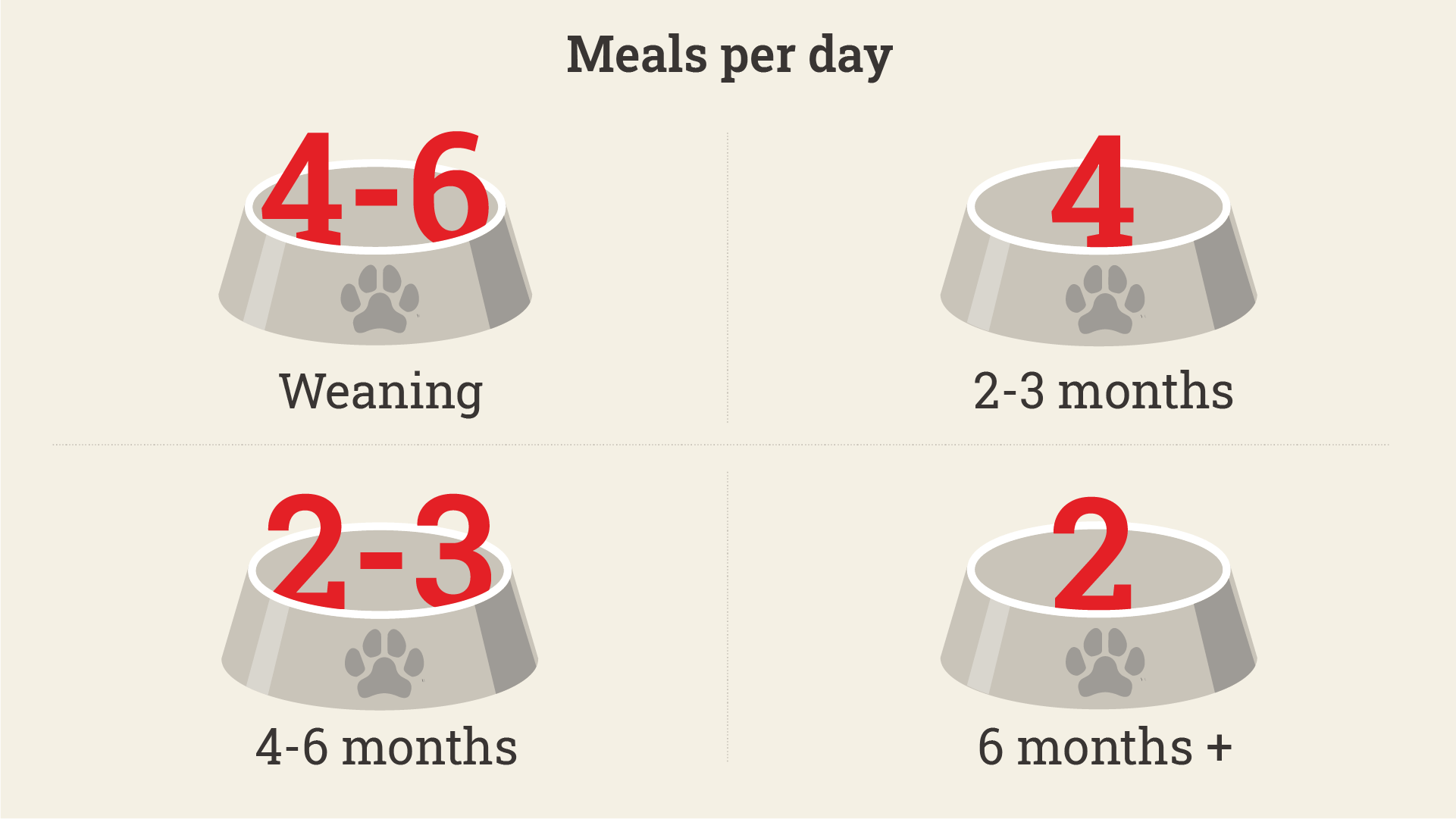
Here is a guideline for how many times a day to feed a puppy:
- From starting to offer food to weaning (usually two months) - 4-6 meals a day.
- From two to three months - 4 meals a day.
- From four to six months - 2-3 meals a day.
- Over six months - 2 meals a day (depending on breed).
Check out our video for a step-by-step guide on making sense of packaging feeding guides.
The exact amount that you should feed your puppy can vary depending on their age, breed, any medical conditions and how energetic they are – more playful puppies will burn more energy, so need more food for fuel! Use our body condition tool to help assess your puppy and make sure that they’re growing properly and aren’t under or over weight.

It’s better for younger puppies to eat little and often, as this won’t overwhelm their developing digestive system – no matter how enthusiastic they are about finishing their bowl of food!
How to feed your puppy

Feeding Methods: Wet vs. Dry Food
Wet Puppy Food
As well as deciding what to feed your puppy, it’s important to consider how to feed it.
Wet puppy food is best served at room temperature, as this can make it more appealing to your puppy.
If you store wet food in the fridge, take it out in advance so it can come to room temperature before meal times. If needed, it can be warmed, but stir it well and check there are no hot spots before serving.
Dry Puppy Food
While wet food goes stale quickly if left out, dry puppy food will last during the day and won’t spoil. Many puppies like to crunch on their dry food, but if yours prefers it moistened, or there’s a medical reason to avoid hard food, leave the puppy food in a little water for a few minutes before serving.
Chewing kibble can help support dental health, so you might want to add a regular dental treat to your dog’s diet if they prefer to have their dry food moistened. Just remember to take these treats into consideration with their daily calorie intake.
How to change from wet to dry puppy food

Follow these steps to help your puppy adjust:
- Start with their current food: if you’ve just brought them home for the first time, it’s a good idea to keep them on the food recommended by the breeder or rescue centre at first, unless there’s an obvious problem.
- Introduce the new food slowly: If you do need to change their food, take your time to give their tummy a chance to adjust. Mix a little of their new food into the old one, gradually adding more and more over the course of 7-10 days until your puppy is just eating the new food.
- Give your puppy time to adjust: If you switch from a wet puppy food to a dry food, your puppy may take some time to adjust. They will chew it more actively, may take longer to eat and are likely to require more water. If you’re switching from dry to wet, don’t be surprised if they drink a little less.
- Make sure portions are adjusted properly: It’s worth remembering that a portion of dry food will often look smaller than a portion of wet food because dry foods are generally more energy-dense. This also means that your puppy may need a larger volume of wet food to receive the same calories.
Following our advice on how to feed your puppy should mean that you have a happy and healthy dog with plenty of energy to play with!
What puppies should not eat


If you do give dog treats or titbits occasionally, these should never account for more than 10% of your dog's total daily intake.
Also, be aware there are some foods to stay clear of. Raw feeding is a personal choice, but it does carry some risks, particularly for young puppies and in households where hygiene may be harder to manage. Bones should also be avoided, especially brittle chicken and fish bones, as these can damage teeth and cause obstructions in the gut. Never feed your dog ‘human’ chocolate, as it is toxic to them.
Here are some things you should never feed a puppy:
Check our list of harmful substances for dogs. You should also consult your vet if you have any other questions about which foods you should avoid feeding your puppy.

Discover the PRO PLAN dog range
Essential Puppy Feeding Tips
- When they’re old enough, treats can be included as part of your puppy’s daily food allowance. Crunchy or chewy treats can even help support dental health.
- Serve wet puppy food at room temperature so make it more appealing. Always wrap/seal unfinished tins or pouches, store in the fridge, and use within 24 hours.
- To start with, keep your puppy on the same food they were fed before you brought them home. This will help reduce the risk of digestive upset.
- If you do change food, it’s best to do so slowly, by starting with the old food and gradually adding the new food over the course of a few days.
- If you’re feeding more than one puppy, consider doing so separately so one puppy doesn’t eat more than the other, and there’s no competition.
A happy and healthy pup needs both good nutrition and exercise that is appropriate for their age and stage of development. Make sure your first months together go by as smoothly as possible with our useful puppy guides. Discover how you can help them become a friendly companion and what to do if your puppy shows signs of separation anxiety.
FAQs

Purina Editorial Team


Related articles